ADVERTENTIE

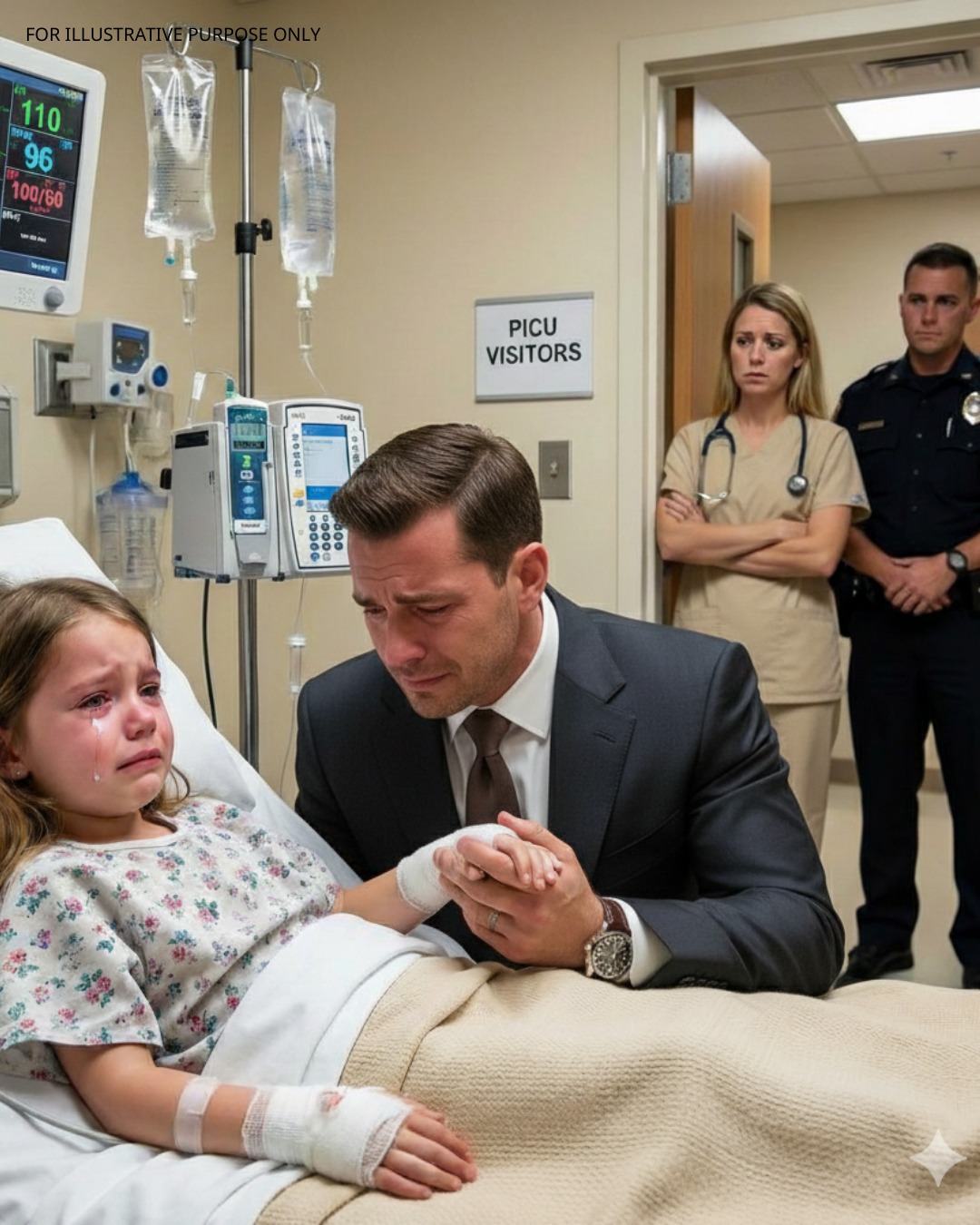
The hospital called and informed me that my eight year old daughter was in critical condition. When I arrived, she whispered to me what her stepmother had done, and the authorities had to intervene. The phone call that changed everything At 6:14am the phone rang, breaking through the silence of a cold January morning. I was sitting in my car engine was already running one hand on the steering wheel the other on the rear view mirror. My thoughts are spinning about numbers, deadlines and a meeting scheduled for later in the morning. I remember thinking about profit charts and quarterly goals and believing these were the really important things. Then a name appeared on the dashboard display that put a stab in my chest. Riverside Children’s Medical Center. I was thirty nine years old. I had always considered myself practical and prudent, for someone who didn't panic so easily. But even before I answered the call, a deep, instinctual fear came over me – the kind of fear that only parents understand. "Mr. Reynolds? “The voice of the woman on the other end of the cable was quiet, but heavy. ‘Yeah. Here he is. “ "Her daughter Hannah was admitted about twenty minutes ago. Her condition is in critical condition. They need to come at once. “ The world around me blurred to a single sound. I don't remember how I hung up. I don’t remember how I parked. I just remember the road passing me while I was speeding way too fast and my hands were shaking at the steering wheel. I kept telling myself it had to be an accident. A fall. A sudden illness. Everything but not what my heart feared so much. The life I had built for myself Hannah was eight years old She had my dark hair and her mother's silent eyes. Since she lost her mother two years ago after a long illness, she had changed. She said less. She smiled less. Every doctor told me the same thing: Children need their time to grieve. I just crashed into work. Long hours. Late Nights . I talked myself into it's necessary. I did it for her. For the school. For stability. For the future her mother would have wanted. That time Melissa entered our lives. She looked perfect. Organized. Used. Easy. She talked softly to Hannah, helped with homework and prepared break bread. When we got married the following year, I felt relieved, almost proud of myself. “She needs a mother figure” I told myself. "Everything will be alright now. “ I didn't wonder why Hannah didn't run to the door anymore when I got home. I didn't wonder why she wore long sleeves even in warm weather. Never wondered why she always looked at Melissa before she took a bite. I chose comfort over attention. And i paid for it. In the hospital The smell of disinfectant hit me as soon as I stepped through the automatic doors. I rushed to the reception and called my daughter's name. Nurses eyes changed when she looked at me. Not just a concern. A little bleak. 'Childhood Trauma Station. Third floor . “ Trauma. The elevator ride seemed endless. When the doors opened, a doctor was waiting for me. "Before you go in," he said softly, "you must be prepared." She's conscious but in a lot of pain. “ The room was poorly lit, mainly by monitors and soft ceiling light. Hannah looked incredibly small in the hospital bed. Her skin was pale . Too pale. But my gaze immediately fell upon her hands, wrapped in thick white bandages resting on pillows. "Daddy?" ", she whispered hardly audibly. I kneel next to her bed. ‘I’m here, darling. I am right here. “ I wanted to touch her, hold her, but I was panicking afraid to hurt her. "What's going on?" ‘, I quietly asked. 'Was it an accident? “ Her breath was moving faster. Her look was hovering at the door. "Please don't let her in," she whispered. "Who, Hannah?" “ She was taking a hard time to swallow. „Melissa.“

ADVERTENTIE
ADVERTENTIE

Hannah war acht Jahre alt. Sie hatte meine dunklen Haare und die ruhigen Augen ihrer Mutter. Seit dem Tod ihrer Mutter zwei Jahre zuvor nach langer Krankheit hatte sie sich verändert. Sie sprach weniger. Sie lächelte weniger. Alle Fachleute sagten mir dasselbe: Kinder trauern in ihrem eigenen Tempo.

Ich stürzte mich in die Arbeit. Lange Arbeitszeiten. Späte Nächte. Ich redete mir ein, es sei notwendig. Ich tat es für sie. Für ihre Schule. Für Stabilität. Für die Zukunft, die sich ihre Mutter gewünscht hätte.

Das war der Zeitpunkt, als Melissa in unser Leben trat.

Sie wirkte damals perfekt. Organisiert. Elegant. Ruhig. Sie sprach freundlich mit Hannah, half bei den Hausaufgaben und bereitete Lunchpakete zu. Als wir im darauffolgenden Jahr heirateten, war ich erleichtert, fast stolz auf mich selbst.

„Sie braucht eine Mutterfigur“, sagte ich mir.
„Jetzt wird alles gut.“

Ich fragte mich nicht, warum Hannah nicht mehr zur Tür rannte, wenn ich nach Hause kam. Ich fragte mich nicht, warum sie selbst bei warmem Wetter lange Ärmel trug. Ich fragte mich nicht, warum sie Melissa immer ansah, bevor sie einen Bissen aß.

Ich habe Bequemlichkeit dem Bewusstsein vorgezogen. Und ich habe es bitter bereut.

Im Krankenhaus
Der Geruch von Desinfektionsmittel schlug mir sofort entgegen, als ich durch die automatischen Türen trat. Ich eilte zur Rezeption und rief den Namen meiner Tochter.

Der Blick der Krankenschwester veränderte sich, als sie mich ansah. Nicht nur Besorgnis. Etwas Düstereres.

„Kindertrauma-Einheit. Dritter Stock.“

Trauma.

Die Aufzugfahrt schien endlos. Als sich die Türen öffneten, wartete ein Arzt auf mich.

„Bevor Sie hineingehen“, sagte er sanft, „müssen Sie vorbereitet sein. Sie ist bei Bewusstsein, aber sie hat starke Schmerzen.“

Lesen Sie weiter, indem Sie unten auf die Schaltfläche ( NÄCHSTE SEITE 》 ) klicken!

ADVERTENTIE
ADVERTENTIE